Optimise your portfolio with financial intelligence.
Most investors don't realise how much their portfolio is costing them. Hidden fees, poor diversification, and misaligned allocations quietly drag on returns.
See your true portfolio exposure and performance in seconds.

Portfolio Health Score
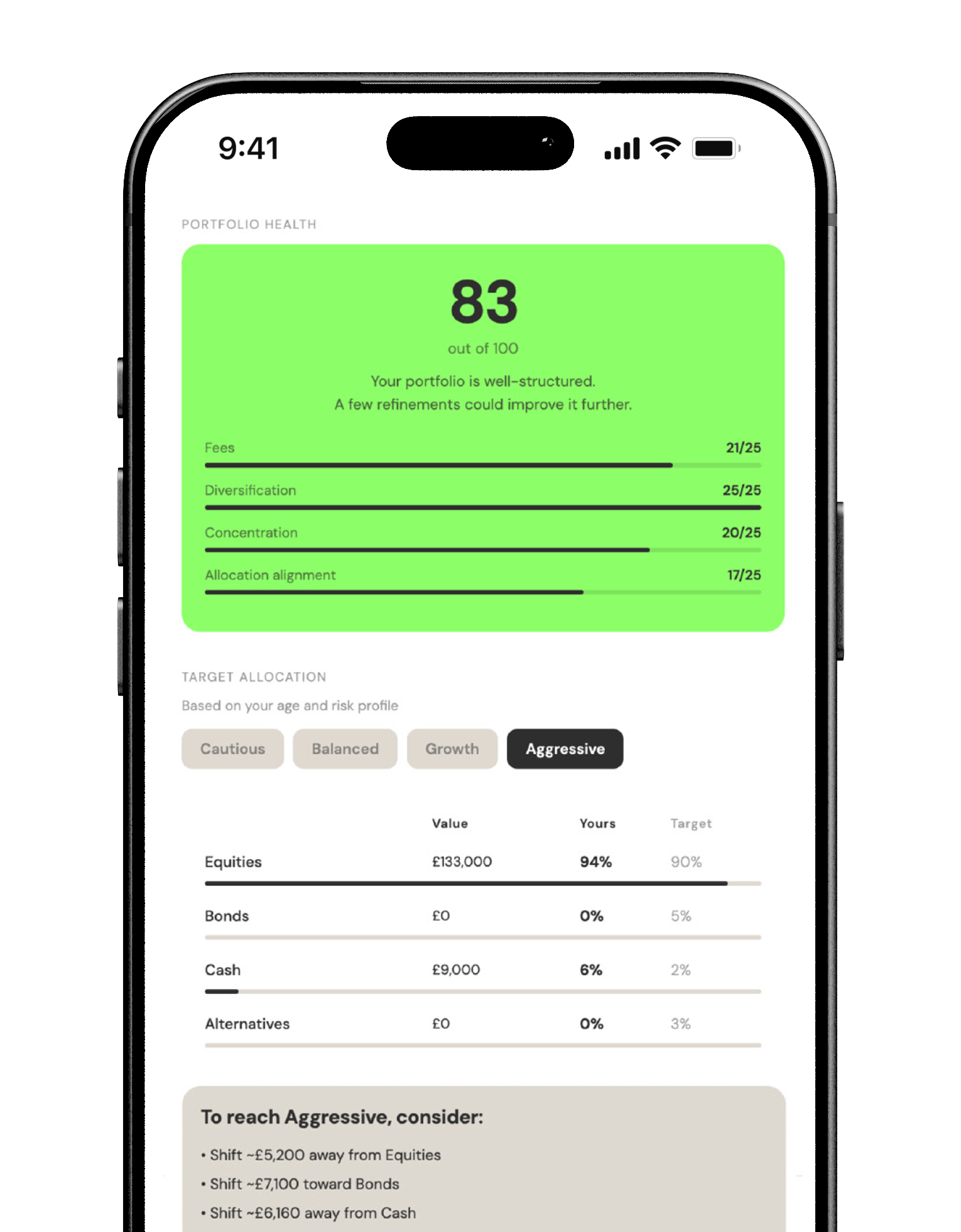
Scored 0–100 across fees, diversification, concentration risk, and allocation alignment. No guesswork — you see exactly what's working and what's holding you back.
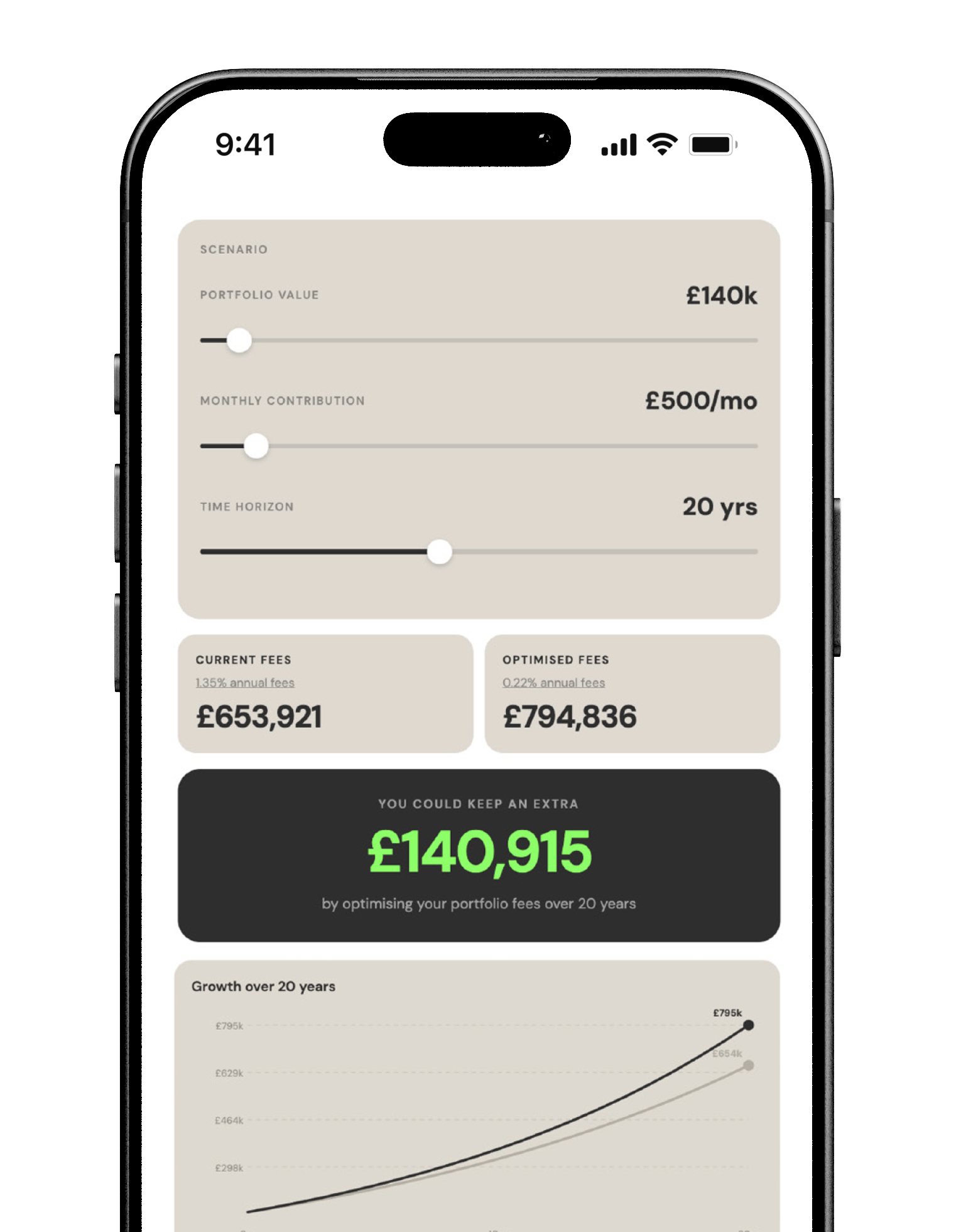
Fee Calculator
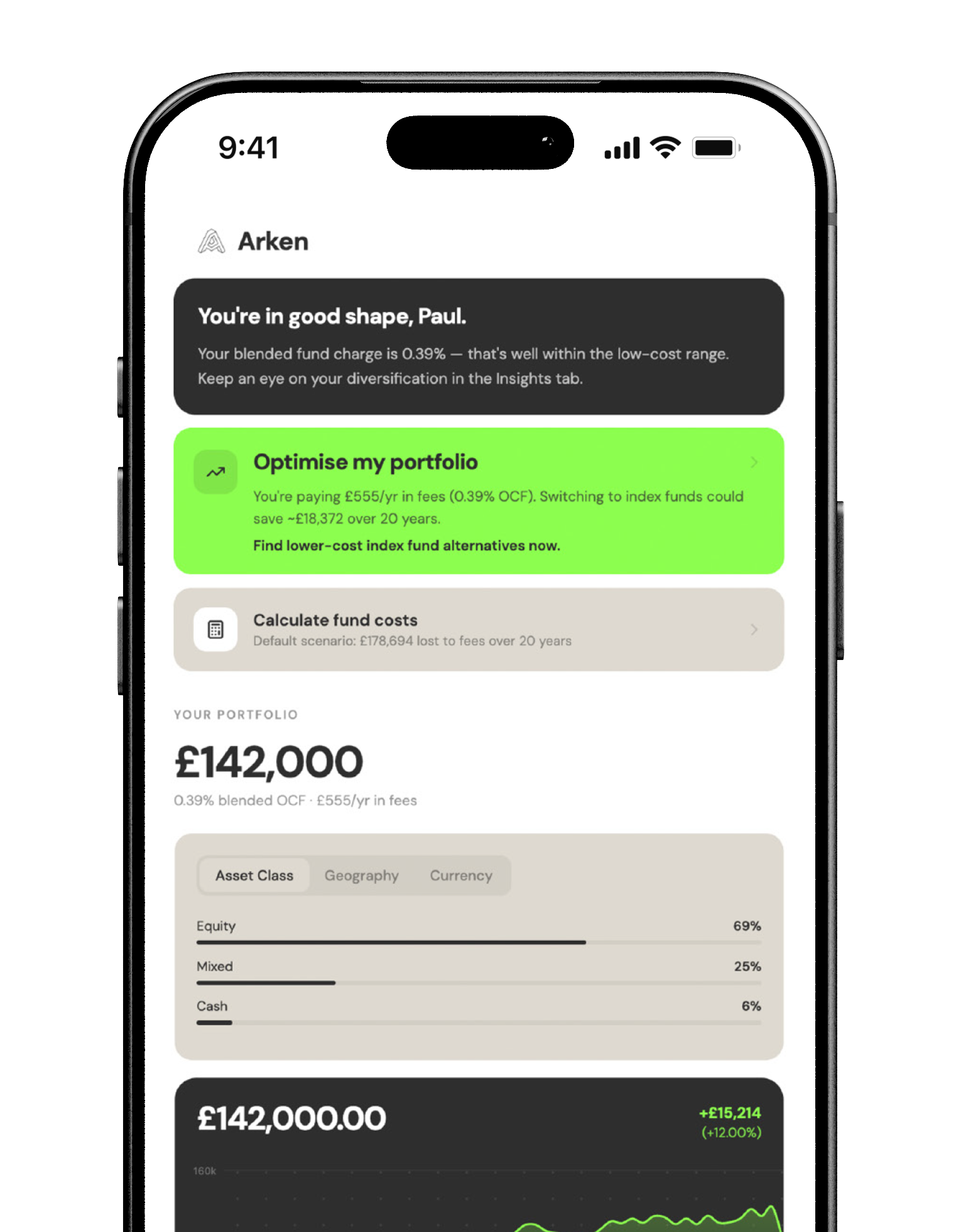
A 1.5% charge sounds small. Over 20 years it can silently erode tens of thousands of pounds. See the real cost of your current portfolio and compare alternatives.
Optimise for Growth
Arken compares your holdings against Cautious, Balanced, Growth, or Aggressive allocation models — and shows you exactly what to rebalance.
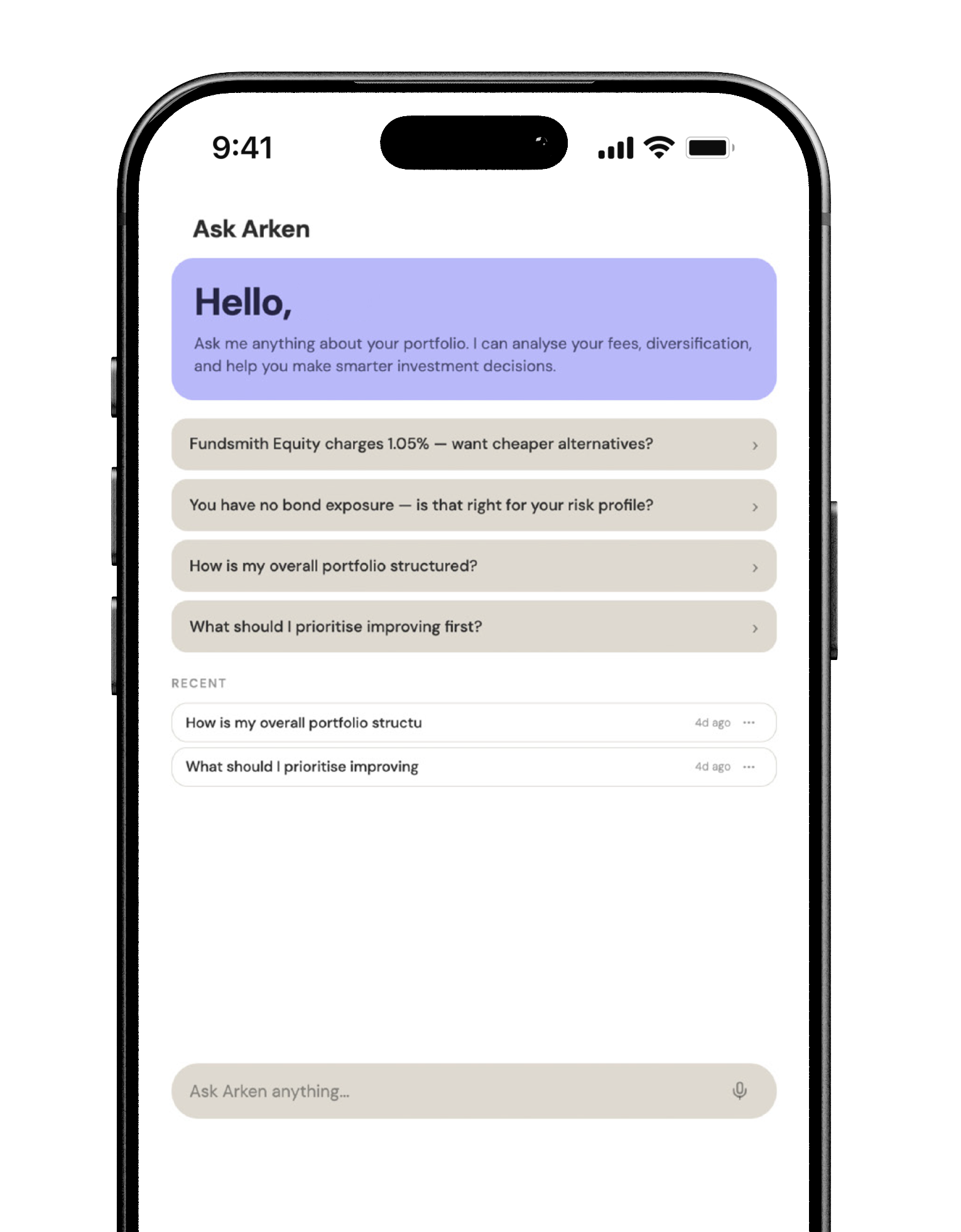
AI Advisor
Talk to Arken by text or voice about your specific portfolio. It knows your holdings, fees, and risk profile. Direct, contextual answers — not generic articles.
Optimise your investment portfolio with AI-powered smart analytics.
Arken gives you personalised portfolio health checks and fee analysis to help you invest better.
- AI investment advisor
- Portfolio analysis & health check
- Personalised investment guidance
- Daily market correction
- Risk / performance / diversification
- Investment decisions
- Voice chat
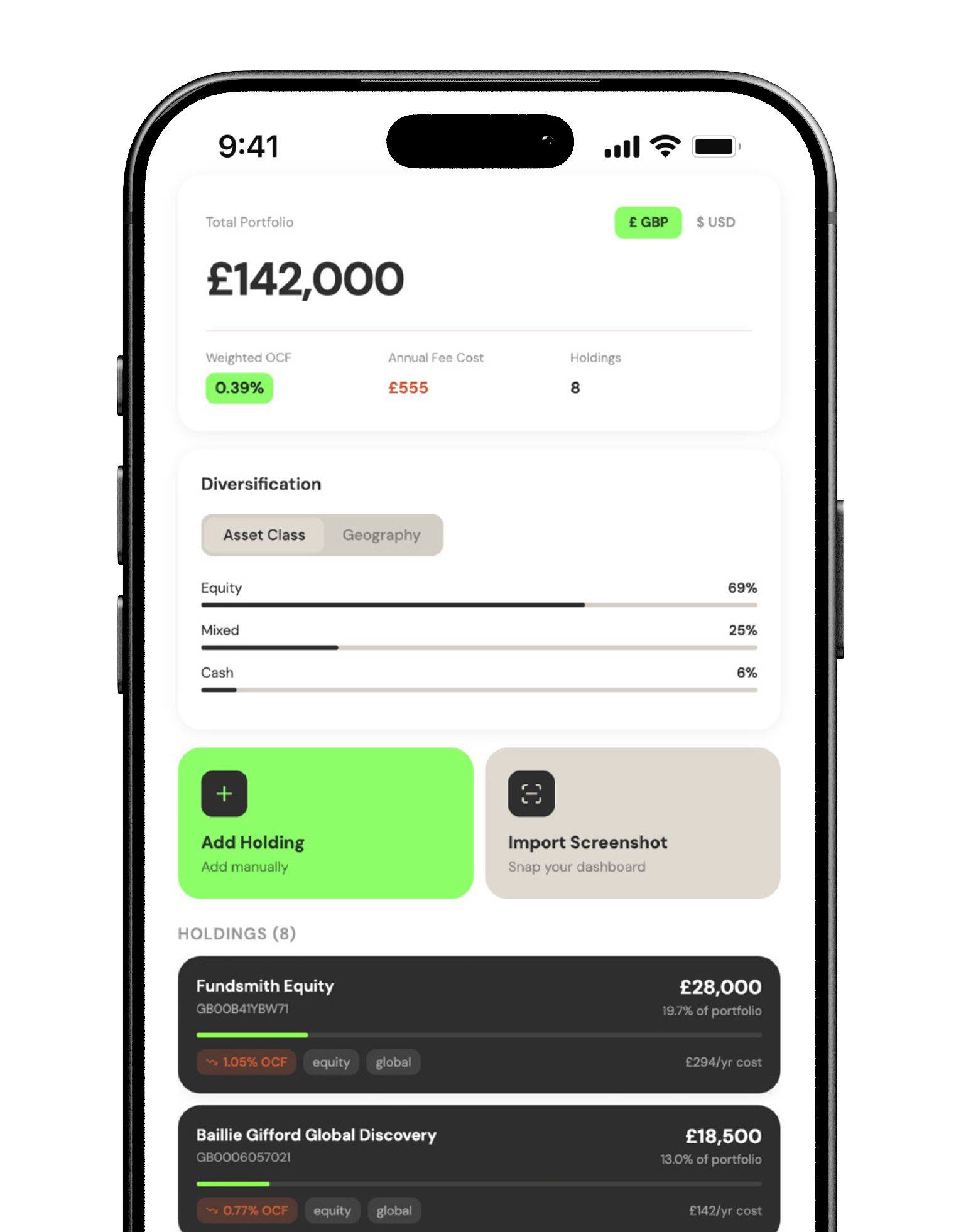
A complete view of your portfolio, positions, and performance at a glance.
See what your portfolio is really doing
Add your holdings manually or take a screenshot of your broker dashboard. Arken's AI reads it and imports everything:
- funds, ETFs, stocks, crypto, bonds, and cash
- complete with fees, asset classes, and tax wrappers (ISA, SIPP, GIA, JISA, LISA)
Monitor all your investments in real-time with actionable insights.
Optimise for growth
- Arken compares your holdings against target allocation models — Cautious, Balanced, Growth, or Aggressive — and shows you exactly what to rebalance.
- It flags overconcentration, missing asset classes, and expensive funds dragging on your returns.
- For every high-cost fund, it suggests a lower-cost equivalent and calculates your projected savings over 10 years.
Get tailored advice based on your position.
Get your health score
- Your portfolio is scored 0–100 across four pillars: fees, diversification, concentration risk, and allocation alignment.
- No guesswork. You see exactly what's working and what's holding you back.
Run the numbers.
The fee calculator shows how different cost structures compound over decades.
- Set your starting amount, monthly contributions, and time horizon to see the real difference — a 1.5% charge might sound small, but over 20 years it can silently erode tens of thousands of pounds.
AI-powered suggestions to save on fees and maximise growth.
Ask your AI advisor
- Talk to Arken by text or voice about your specific portfolio. It knows your holdings, your fees, and your risk profile, and gives you direct, contextual answers.
- Arken doesn't sell products or earn commission.
- Your data stays on your device.
Arken is an educational tool. It is not regulated by the FCA or SEC and does not constitute financial advice.
Arken is an educational tool. It is not regulated by the FCA and does not constitute financial advice.
25 UK investing questions, answered
Portfolio health, fees, risk, tax wrappers and retirement — answered in full over on Arken Invest.
Arken is an educational tool. It is not regulated by the FCA and does not constitute financial advice.